

How to Remove Burnt-On Grease from Your Oven (And When to Call in the Pros)
If you've ever opened your oven door and been hit with a wall of smoke from burnt-on grease, you know the problem isn't just cosmetic. Built-up carbon affects how evenly your oven cooks, makes your kitchen smell like an ashtray every time you turn it on, and, left long enough, can even trip your smoke alarm.
Here's what actually works, what doesn't, and when it's time to stop scrubbing and call a professional oven cleaning service.
Why Grease Turns Into Carbon in the First Place
Every time you cook, small amounts of fat and food residue splatter onto the oven walls, racks and door. At high heat, that residue doesn't just sit there, it carbonises. Over weeks and months, it builds into a hard, black, baked-on layer that regular wiping won't touch.
The longer it's left, the harder it bonds to the enamel. That's why a job that would've taken ten minutes six months ago can take an entire afternoon once it's had a year to set in.

What Actually Works for DIY Cleaning
Baking soda and water paste. Mix baking soda with a small amount of water into a thick paste, spread it over the grease, and leave it for at least four hours (overnight is better). The alkaline reaction helps break down grease without harsh chemicals. Wipe away with a damp cloth and a bit of elbow grease.
Vinegar as a finishing spray. Once the baking soda paste has done its work, a light vinegar spray helps lift any residue and cuts through the chalky baking soda film.
Avoid oven cleaning sprays with heavy fumes. Many supermarket oven cleaners work, but they're harsh, they're not something you want to breathe in a small kitchen, and they can damage certain oven linings if left on too long. If you go this route, ventilate the room well and never mix products.
Why Some Grease Won't Budge, No Matter What You Try
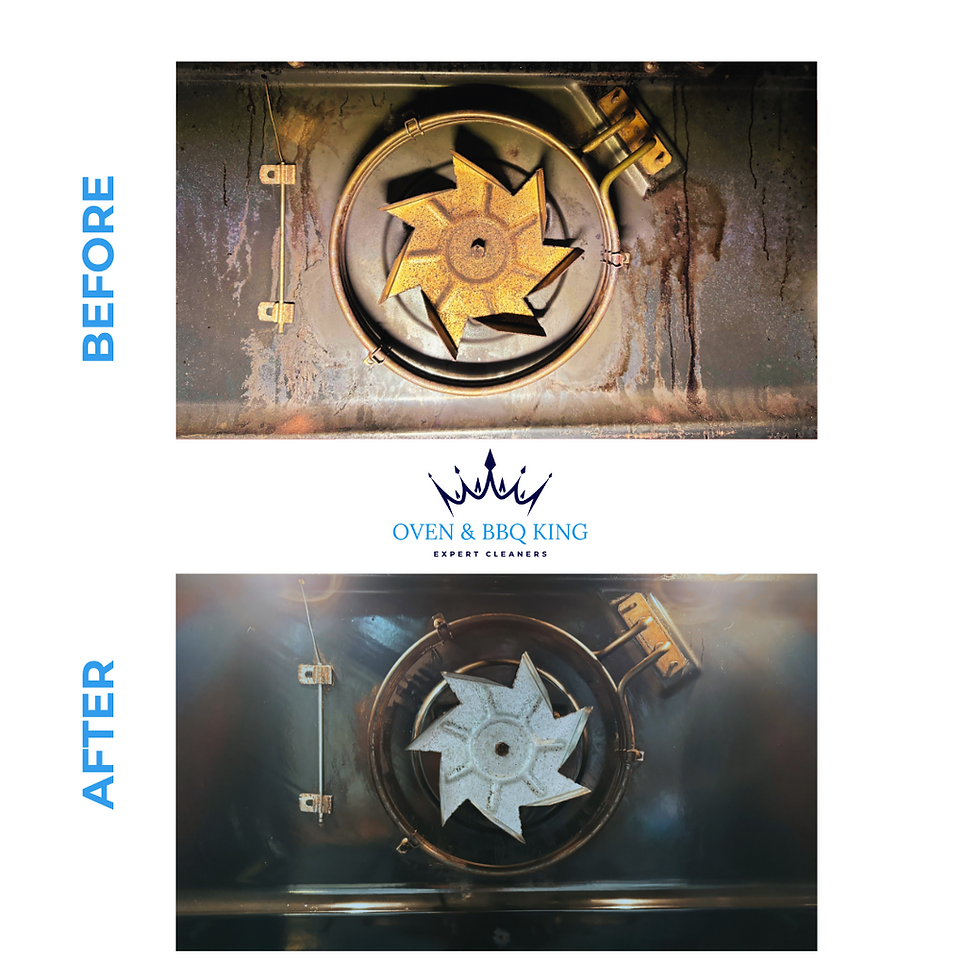
For light, recent buildup, the baking soda method above will usually get you there. But for ovens that haven't been properly cleaned in six months or more, especially around the fan, heating elements, and door seals, DIY methods often only get you partway. The carbon has bonded too deeply, and further scrubbing risks damaging the enamel or scratching the glass door.
This is the point where most people either give up on getting it fully clean, or end up spending more on repeat DIY attempts (and ruined sponges) than a professional clean would have cost in the first place.
When It's Worth Calling a Professional
A professional oven clean makes sense when:
Buildup has been there for six months or more
You've tried DIY methods and grease is still visible after multiple attempts
You're preparing for a rental inspection or end-of-lease clean and need it done properly the first time
You want to avoid harsh chemical sprays in your kitchen altogether
At Oven and BBQ King, we use eco-friendly, non-toxic cleaning products that break down even heavily carbonised grease without the fumes or residue of supermarket chemical sprays. Our team removes racks, trays and panels to clean parts you can't easily reach yourself, restoring your oven properly rather than just wiping the surface.
We also clean BBQs, rangehoods, hotplates and microwaves, so if it's an appliance with built-up grease, we've likely already cleaned one just like it.
The Bottom Line
Regular light cleaning (every 4-6 weeks) keeps grease from ever reaching the carbonised stage. But once it's set in, DIY methods have real limits, and using aggressive chemical sprays to compensate isn't a great trade-off for your health or your oven's lining.
If you're in Brisbane or the Gold Coast and your oven has gone past the point of a Sunday-afternoon scrub, get in touch for a free quote. It's usually faster, cheaper, and less hassle than you'd expect.
Comments